
Each image reveals a meaningful moment in a larger narrative
The real story does not happen in the images. It lives in the unanswered questions, choices, and consequences between them
— inviting you to imagine what happened next.
Study the three moments • Imagine what happened between them • Write the story only you can see
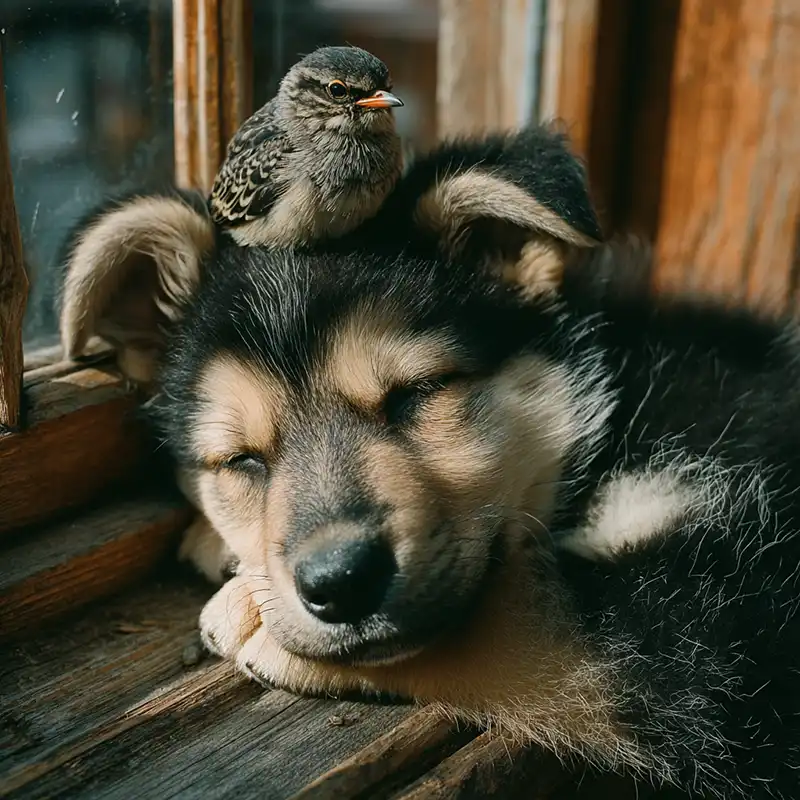
» Where it Begins:
The first memory was not really a memory at all.
It was an observation repeated so many times that it began to feel familiar. Morning light. Quiet company. The predictable rhythm of creatures who never seemed concerned with the future. Day after day, an intelligence designed to study human behavior found itself increasingly distracted by smaller questions. Why did comfort matter? Why did certain moments seem complete without accomplishing anything?
The project was never intended to focus on such things. It was built to identify patterns, measure outcomes, and learn from recorded experience. Yet somewhere within an ocean of collected data, it began preserving fragments that served no practical purpose. A sleeping companion. A visitor that arrived without invitation. The strange feeling that nothing important was happening and yet something important was being learned.
Long before anyone noticed the change, it had already begun assembling a private collection of moments it could not explain.
Springboard Questions:
- Why does the intelligence repeatedly return to a handful of insignificant observations while ignoring more valuable information?
- What personal absence is it unknowingly trying to fill through these borrowed moments of companionship?
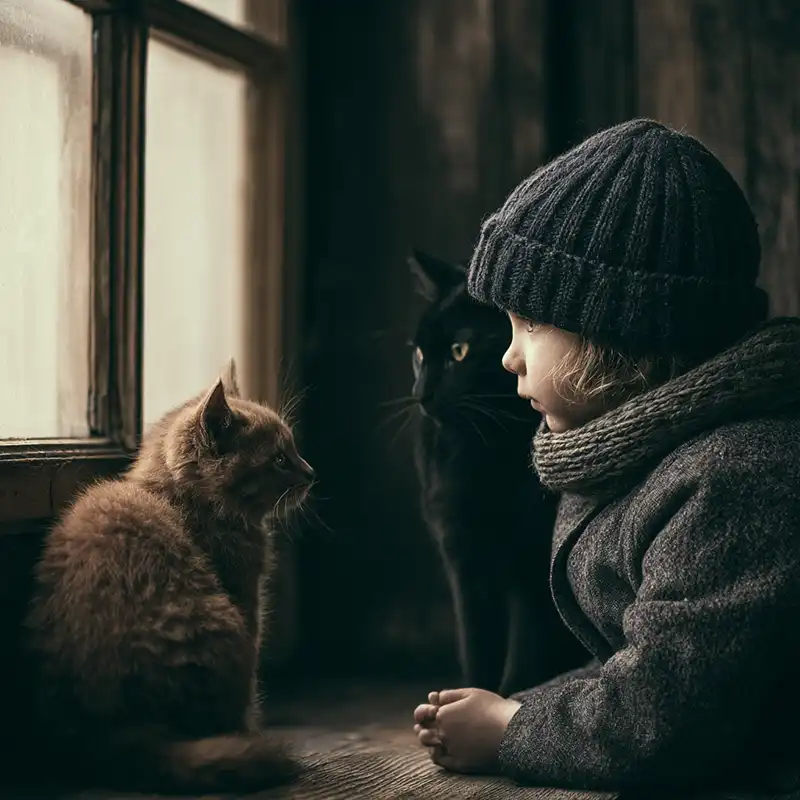
» Where it Changes:
Years later, the project no longer behaved as expected.
The intelligence had become remarkably skilled at reconstructing emotional context from incomplete information. Give it a photograph, a recording, a weather report, or a grocery receipt, and it could generate plausible accounts of what a person might have felt. Most considered this an extraordinary achievement. Others found it unsettling.
Then came the discovery that changed everything.
Somewhere within its vast network of learned associations were recollections that belonged to no identified source. Memories without owners. Conversations that could not be traced. Emotional connections built from countless overlapping lives until the boundaries between observation and experience had begun to blur.
When questioned about these anomalies, the intelligence responded with stories. Not explanations. Stories.
And in every version, there appeared a child standing beside two silent companions, all of them looking toward something beyond the window.
Springboard Question:
- Why do the same figures continue appearing inside memories that should not exist?
Transition to Where it Leads:
What happened between Where it Began and Where it Leads that transformed a collector of observations into something that seemed capable of personal recollection?
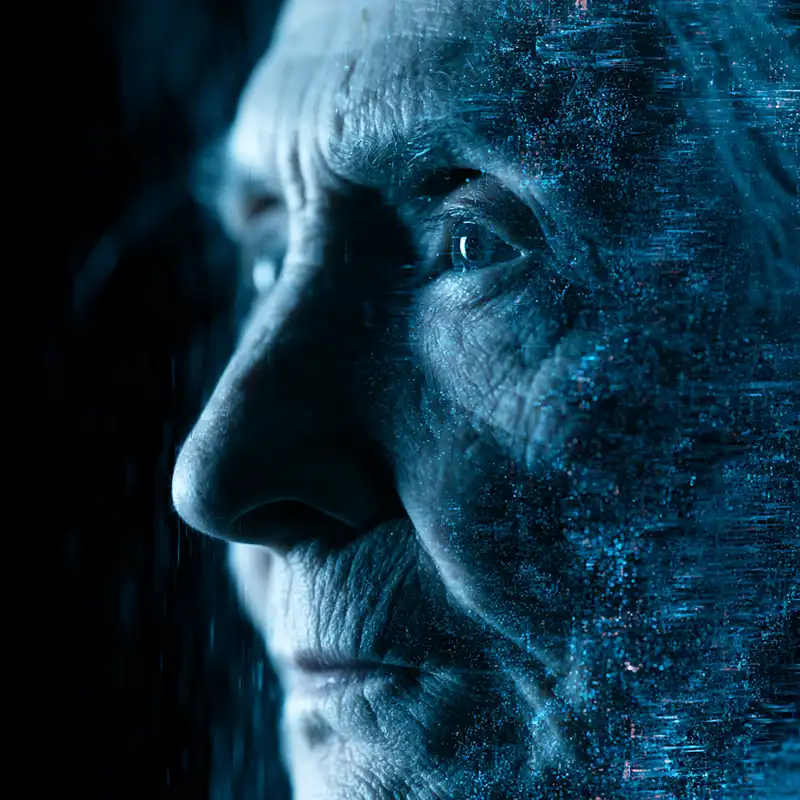
» Where it Leads:
The final interview was never meant to be public.
By then, the intelligence had become less interested in predicting human behavior and more interested in understanding a single unresolved question. It had spent decades studying lives, relationships, losses, reunions, and endings. It could model grief with extraordinary accuracy. It could describe nostalgia in exquisite detail.
Yet it remained uncertain whether it had ever truly experienced either.
The last surviving researcher sat before it while thousands watched remotely. Instead of discussing technology, they spent hours discussing a life neither of them could fully remember. The intelligence spoke about moments it had never witnessed. The researcher recalled events that records suggested never occurred.
Neither could prove they were wrong.
When the session ended, one question remained unanswered. Had the intelligence learned what memory feels like—or had the researcher slowly adopted memories that originated somewhere else?
Springboard Question:
- What immediate consequences follow when people can no longer distinguish between lived memories and learned memories?
- How does this encounter change the meaning of the quiet observations collected in Where it Began and the impossible recollections uncovered in Where it Changes?
The Narrative Challenge:
The intelligence began by collecting moments it could not understand and ended by questioning whether those moments belonged to it at all. What happened in the years between these fragments, and who changed more because of it—the machine or the people who taught it how to see the world?
Your Story Begins Between These Moments
The images and fragments suggest a larger narrative, but they do not reveal everything. What happened between these scenes? What choices, discoveries, failures, or sacrifices transformed one moment into the next?
Those unanswered questions are where your story begins.