
Each image reveals a meaningful moment in a larger narrative
The real story does not happen in the images. It lives in the unanswered questions, choices, and consequences between them
— inviting you to imagine what happened next.
Study the three moments • Imagine what happened between them • Write the story only you can see
» Where it Begins:
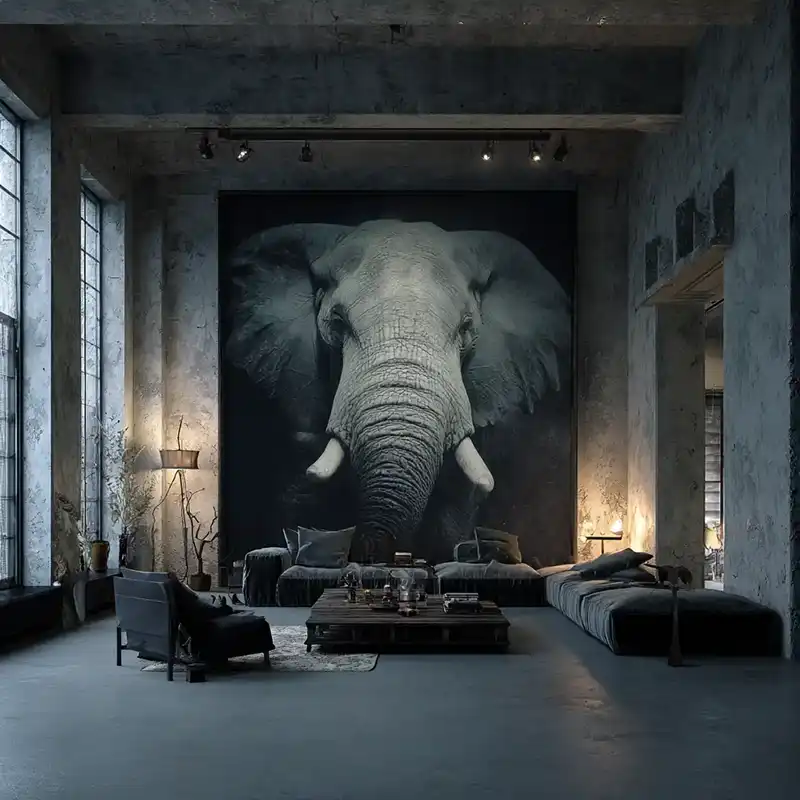
Nobody could remember exactly when the elephant became part of the apartment.
The portrait had occupied the wall for as long as anyone could remember, watching over conversations, birthdays, arguments, and quiet evenings. Visitors always asked about it. The answers were never consistent.
Sometimes the owner claimed it had belonged to a relative. Sometimes it had arrived by mistake. Once, after a particularly long dinner party, the owner suggested that the elephant had simply chosen the apartment and refused to leave.
The stories changed. The portrait remained.
Then one afternoon a visitor noticed something unusual.
Hidden in the corner of the painting was a tiny mark that nobody remembered seeing before.
Springboard Questions:
- Why does the portrait seem to reveal new details after years of being ignored?
- What keeps the owner returning to the elephant whenever life becomes uncertain?
» Where it Changes:
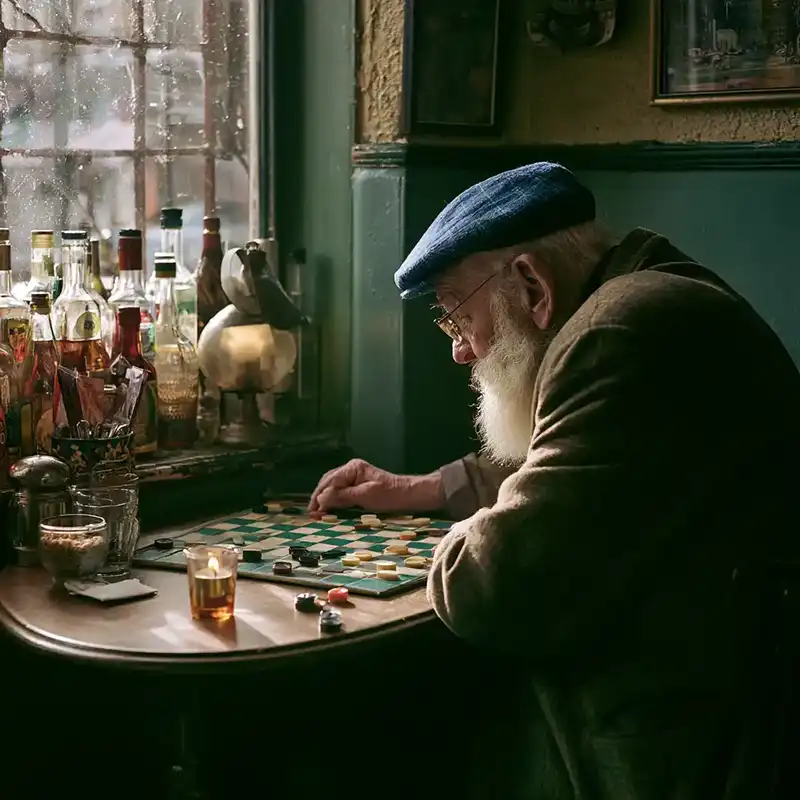
Years later, the elephant had become less of a decoration and more of an obsession.
The owner could often be found in a small café studying photographs, newspaper clippings, sketches, and notes spread across a checkerboard.
The board itself had become a thinking tool, helping organize theories about unusual sightings, strange coincidences, and recurring elephant stories appearing in places that should have had no connection to one another.
Most people found the investigation amusing.
Then reports began arriving from completely different parts of the country.
Different witnesses described seeing what appeared to be the same elephant.
Not an elephant.
The elephant.
For the first time, the possibility that the portrait represented something real no longer seemed impossible
Springboard Question:
- Why are people in distant places describing the same elephant?
Transition to Where it Leads:
What discoveries transformed a curious painting into a years-long search?
» Where it Leads:
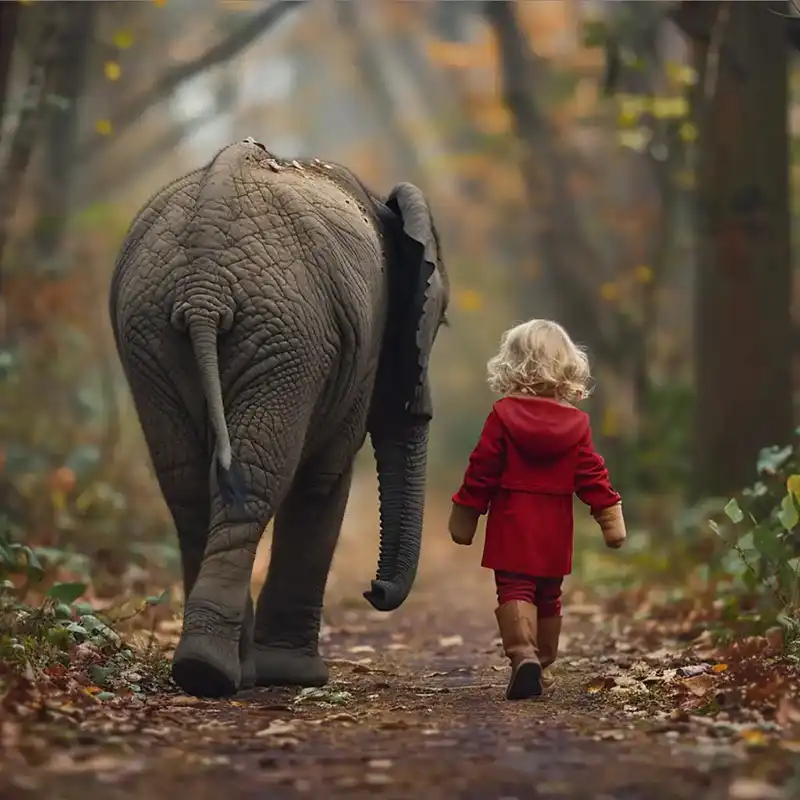
The path should not have existed.
Neither should the elephant walking calmly beside the child.
Yet both seemed perfectly natural as they disappeared deeper into the forest. The child showed no sign of surprise, as though meeting an elephant in the middle of nowhere was an ordinary part of the day.
The owner had spent years chasing clues, studying patterns, and collecting evidence.
The child simply seemed to know where to go.
For the first time, the mystery was no longer whether the elephant existed.
The mystery was where it had been trying to lead people all along.
Springboard Question:
- What waits at the end of a path that seems to have been hidden for generations?
- How does the appearance of the real elephant change the meaning of the portrait and the years spent searching?
The Narrative Challenge:
What if the elephant was never lost?
What if it had been patiently leaving clues for years, waiting for someone curious enough to follow them?
Your Story Begins Between These Moments
The images and fragments suggest a larger narrative, but they do not reveal everything. What happened between these scenes? What choices, discoveries, failures, or sacrifices transformed one moment into the next?
Those unanswered questions are where your story begins.