
Each image reveals a meaningful moment in a larger narrative
The real story does not happen in the images. It lives in the unanswered questions, choices, and consequences between them
— inviting you to imagine what happened next.
Study the three moments • Imagine what happened between them • Write the story only you can see
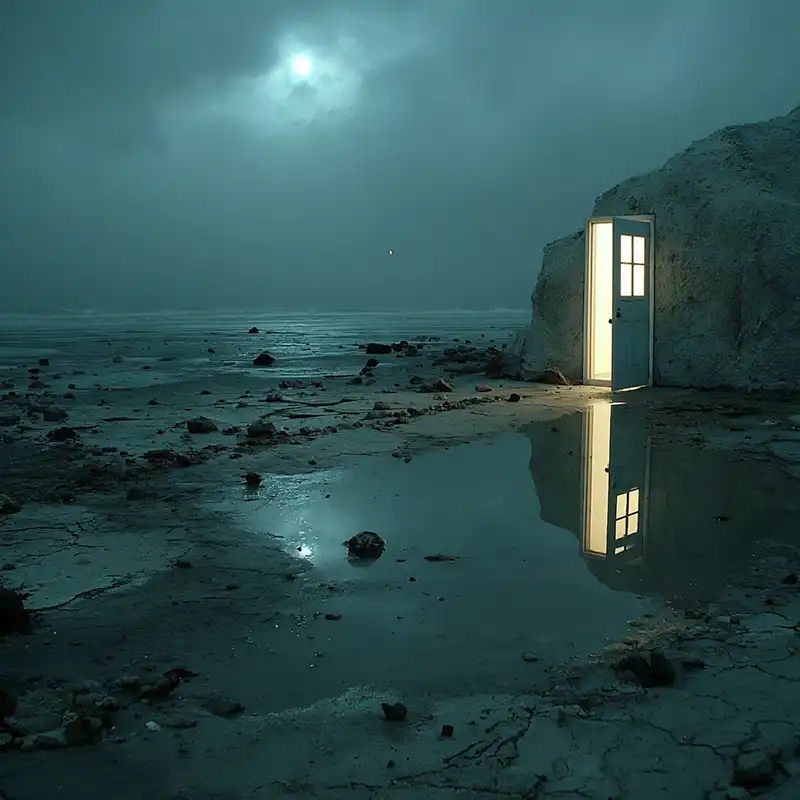
» Where it Begins:
The door appeared sometime during the night. Not attached to a building, not connected to a road, and certainly not expected by anyone living along the shoreline. By sunrise, people were already gathering to look at it. By evening, someone had left a welcome mat outside. A day later, a child had placed a hand-drawn sign beside it that simply read: Please Knock.
No one could agree on what the door was for, but the longer it remained, the more it felt like a neighbor rather than a mystery. People stopped by to wave at it on their way to work. Children left drawings beside the frame. Eventually a curious caretaker from a nearby community garden borrowed a protective suit from a research station and decided that if everyone was going to keep wondering about the door, someone should at least introduce themselves. Before they could knock, the door quietly opened on its own.
Springboard Questions:
- Why does the door seem to welcome visitors?
- What makes this particular person decide to step through?
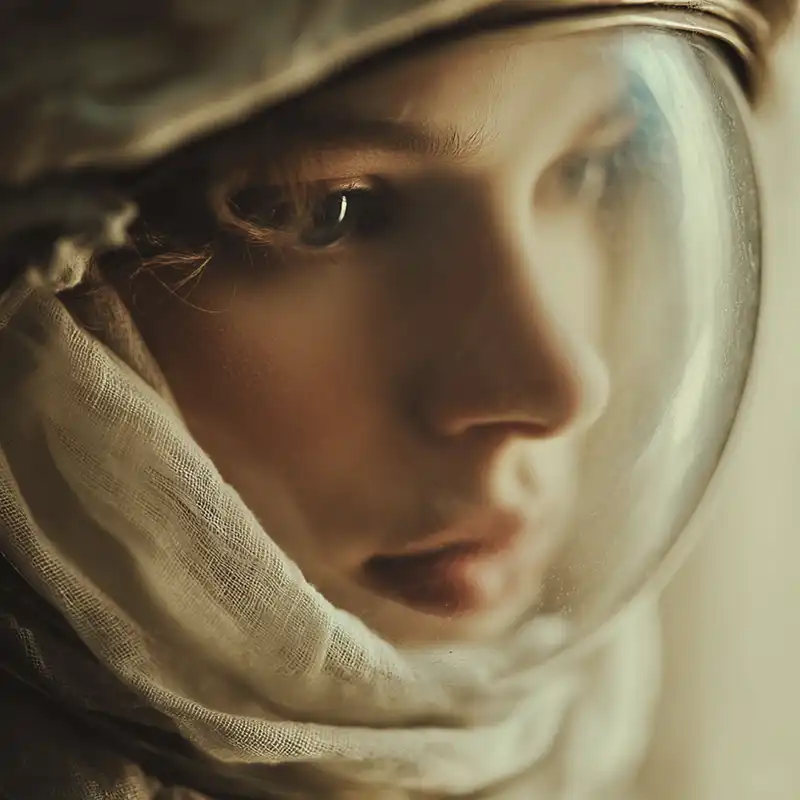
» Where it Changes:
The room beyond the doorway was larger than any building the caretaker had ever entered. Rows of shelves stretched into the distance, stacked with labeled boxes and carefully preserved objects. Some appeared ordinary at first glance—bundles of sketches, notebooks, folded maps, recipe cards, festival plans—but each seemed to have been stored with unusual care, as though someone expected them to matter again someday. The deeper the caretaker ventured into the vast archive, the more they felt less like an explorer and more like a guest.
Wearing the borrowed suit, they spent days opening boxes and recording observations. Patterns slowly began to emerge. Again and again they found plans that had never been completed, gardens that had never been planted, inventions that had never moved beyond a sketch, and celebrations that had never taken place. The room was not preserving achievements. It was preserving beginnings. By the time the caretaker returned to the shoreline with notebooks full of discoveries, neighbors were already gathering each evening to hear what might be waiting on the next shelf.
Springboard Question:
- Who created this enormous archive, and why preserve unfinished ideas instead of completed ones?
- How might people react when they discover someone else's abandoned dream is exactly what their community needs?
Transition to Where it Leads:
What began as one person's curiosity soon spread through neighboring communities. The ideas emerging from the mysterious room started connecting people in ways no one could have predicted.
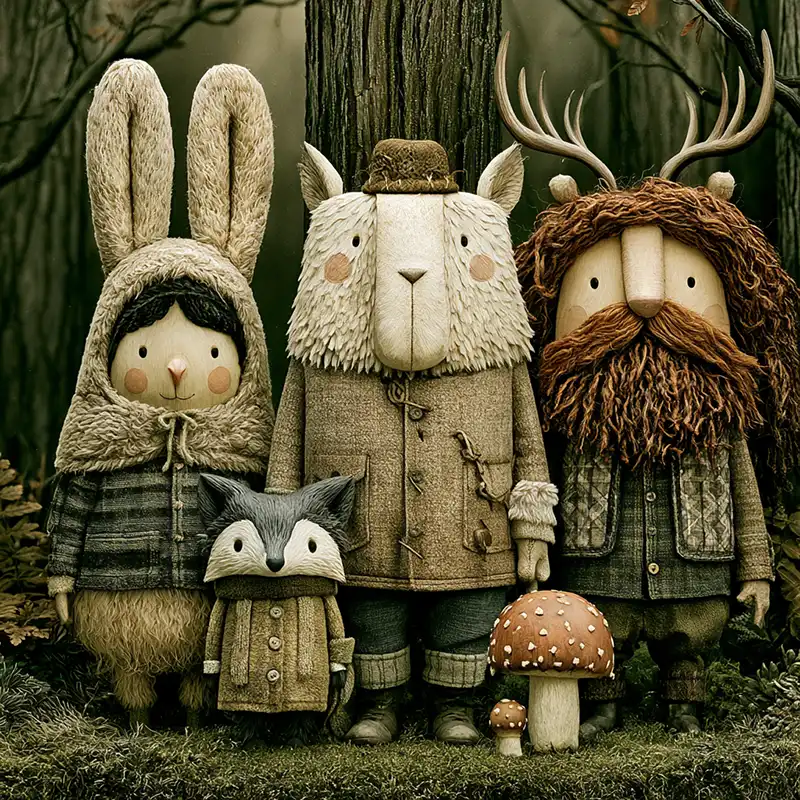
» Where it Leads:
Months later, signs of the room's influence could be found almost everywhere. Empty lots had become gardens. Unused halls hosted new gatherings. Half-forgotten traditions had returned alongside entirely new ones inspired by discoveries from the shelves. People who might never have met found themselves working together on projects that seemed to arrive precisely when they were needed. The notebooks that once belonged only to the caretaker had become shared maps pointing toward possibilities nobody wanted to leave unfinished.
One autumn evening, the caretaker followed a lantern-lit path into a woodland clearing filled with conversation, laughter, and celebration. Travelers, artists, gardeners, builders, and families moved easily among one another, sharing stories about projects that had begun with a single forgotten idea. Among the crowd stood a remarkable group of handmade woodland figures, dressed as though they had stepped from one of the archive's sketches. Watching strangers become collaborators and collaborators become friends, the caretaker finally understood the purpose of the door. It had never been collecting secrets. It had been collecting beginnings, waiting for enough people to discover what they could create together.
Springboard Question:
- Did the door appear because the community was ready for it, or because someone wanted to help them reconnect?
- What other possibilities might still be waiting on the shelves for future generations to discover?
The Narrative Challenge:
The mysterious door may have opened onto a room filled with forgotten possibilities, but the most important part of the story happened afterward. What projects were chosen, which ones failed, which friendships formed, and how did a collection of unfinished beginnings eventually grow into a thriving community? Most importantly, if every shelf contained a possibility waiting for someone to continue it, which one would you choose to bring back into the world?
Your Story Begins Between These Moments
The images and fragments suggest a larger narrative, but they do not reveal everything. What happened between these scenes? What choices, discoveries, failures, or sacrifices transformed one moment into the next?
Those unanswered questions are where your story begins.